If you haven’t tried it yet, this Puttanesca Pasta Recipe is a total game-changer—and believe me, it’s one of those recipes I keep coming back to time and again. It’s bold, tangy, and just the right mix of salty and spicy, all thanks to those pantry staples like olives and capers. The first time I made Puttanesca, I was hooked instantly, and I think you’ll find it’s not only ridiculously delicious but surprisingly easy to pull together any night of the week.
Why You’ll Love This Recipe
- Quick & Easy: Prep and cook in around 30 minutes—perfect for busy nights.
- Pantry Friendly: Uses simple ingredients you probably already have on hand.
- Bold Flavor: The mix of olives, capers, and anchovies give it that irresistible umami punch.
- Crowd-Pleaser: My family goes crazy for this pasta every time I make it—it’s comfort food with a kick!

Ingredients You’ll Need
The beauty of this Puttanesca Pasta Recipe is how the ingredients work in harmony—salty anchovies dissolve into the sauce, while olives and capers add texture and tang. When shopping, look for good-quality canned tomatoes and fresh parsley to brighten things up.
- Extra virgin olive oil: Use a fruity, good-quality oil for the best flavor impact.
- Onion: Finely chopped to melt into the sauce and provide subtle sweetness.
- Garlic: Fresh and finely chopped for a pungent, aromatic punch.
- Anchovies: Don’t skip these—they add deep umami; finely chopped is best so they blend into the sauce.
- Tomato paste: Gives richness and helps thicken the sauce nicely.
- Red pepper flakes: Adds just the right amount of heat without overpowering.
- Crushed tomatoes: The base for our sauce—canned works perfectly here.
- Dried oregano: Classic Italian herb to enhance the sauce’s flavor.
- Capers: Small and briny—they’re one of the stars of this dish.
- Olives: Pitted black or green, roughly chopped; I like a mix for extra complexity.
- Spaghetti, linguine, or fettuccine: Use whatever pasta you prefer; spaghetti is traditional.
- Salt: For the pasta water and seasoning.
- Fresh parsley: Chopped and stirred in at the end for a fresh, herby finish.
Variations
One of the things I love about this Puttanesca Pasta Recipe is how easy it is to tweak depending on what you’re in the mood for. Don’t be afraid to experiment with different olives or even add protein if you want something heartier.
- Add Protein: I sometimes add grilled shrimp or chicken for a more filling meal—works beautifully without losing the classic flavors.
- Make it Vegetarian: Simply skip the anchovies; double up on olives and capers to maintain that salty, briny kick.
- Spice Level: Want it hotter? Toss in extra red pepper flakes or a splash of hot sauce—my husband swears by this.
- Fresh Tomatoes: In summer, chopping fresh, ripe tomatoes instead of canned is a delightful fresh twist.
How to Make Puttanesca Pasta Recipe
Step 1: Prep Your Base with Flavor-Packed Onion and Anchovies
Start by heating up your olive oil in a large, deep sauté pan over medium heat. Once it’s shimmering, toss in your finely chopped onions and cook them gently until they’re soft and translucent; this should take about 4 to 5 minutes. The aroma fills the kitchen at this point, and I swear it gets everyone’s appetite going. While the onions sweat it out, stir in the chopped anchovies along with a bit of their oil from the can—that’s the magic umami that dissolves into the sauce, so don’t skip it! After a minute, add the garlic and cook for just another minute to bring everything together.
Step 2: Build the Deep, Tangy Sauce
Next up, add the tomato paste and cook it in the pan for about 2 minutes, stirring occasionally to prevent burning. This step concentrates the tomato flavor beautifully. Then pour in your crushed tomatoes along with the dried oregano, red pepper flakes, chopped olives, and capers. Bring the sauce to a gentle simmer, then reduce the heat to low and let it bubble softly for 10 to 15 minutes. The sauce will thicken and those briny flavors from the olives and capers will merge perfectly—this is where the magic happens.
Step 3: Cook the Pasta Just Right
While your sauce is simmering, bring a large pot of water to a boil—don’t forget a generous pinch of salt, about a tablespoon for every two quarts of water. Add your pasta when the water’s roaring and cook according to package instructions until just al dente. I always save about half a cup of pasta cooking water before draining—it’s surprisingly helpful for loosening the sauce and helping it cling to the noodles nicely.
Step 4: Bringing it All Together
Stir the chopped fresh parsley into your sauce right before you finish cooking. If the sauce looks too thick, add a splash of that reserved pasta water to loosen it up just a bit. Now drain the pasta, and if you like, drizzle a little olive oil and toss it to keep things from sticking. Add a ladle or two of sauce to the pasta and toss everything gently to combine. Serve up with extra sauce on top—you’ll see just how those bold flavors come alive in every forkful.
Pro Tips for Making Puttanesca Pasta Recipe
- Anchovies Are Your Best Friend: Don’t be scared of anchovies—they melt into the sauce and give incredible depth without a fishy taste.
- Don’t Skip Pasta Water: Adding reserved pasta water helps the sauce stick to the noodles and keeps the dish silky.
- Use Good Olive Oil: A quality extra virgin olive oil at both cooking and finishing stages makes a subtle but noticeable difference.
- Balance the Saltiness: Because capers, olives, and anchovies are salty, taste as you go and adjust the added salt carefully.
How to Serve Puttanesca Pasta Recipe
Garnishes
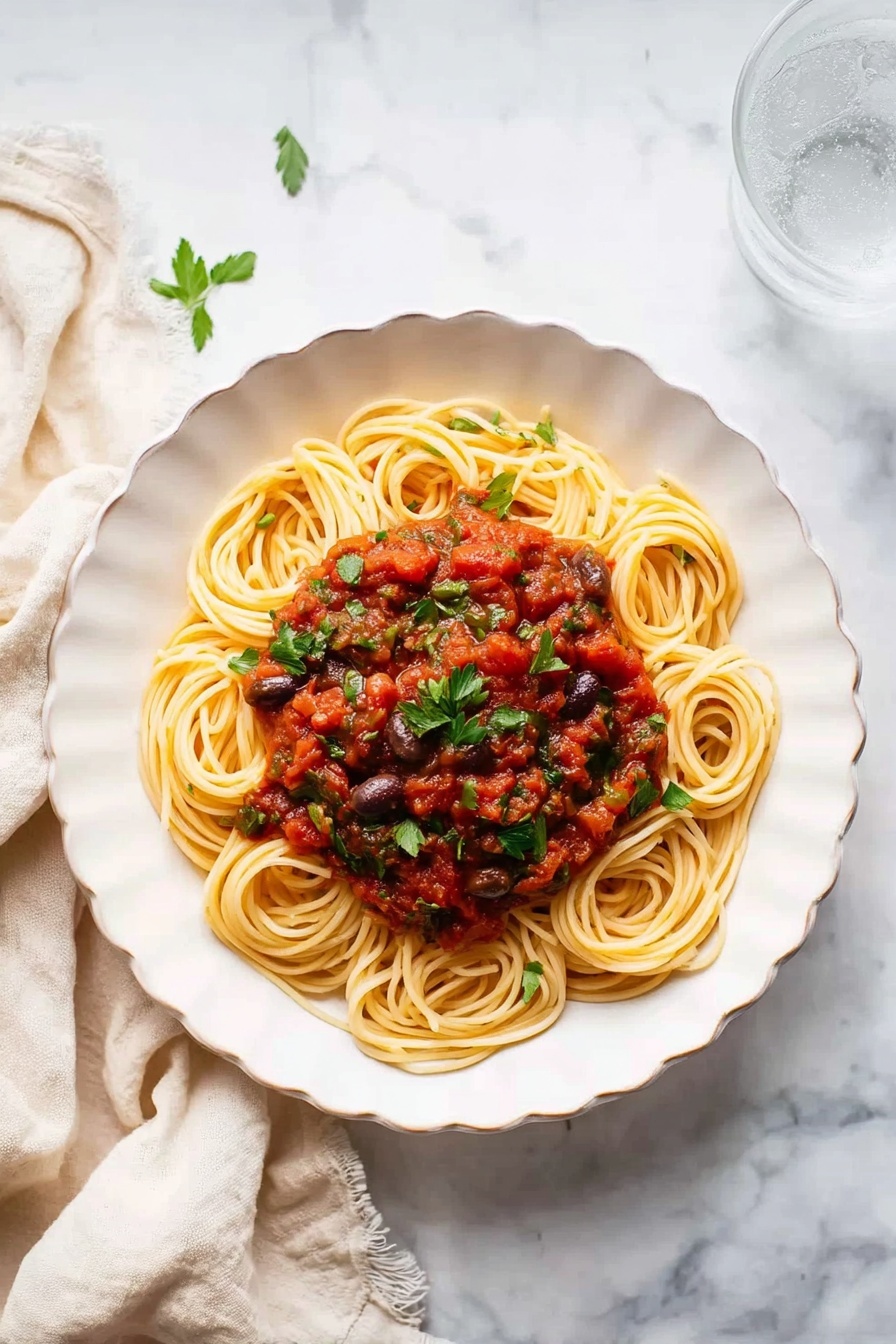
I love to scatter a bit of freshly chopped parsley right before serving—it adds a pop of color and freshness that cuts through the rich sauce. Sometimes, I drizzle a little more extra virgin olive oil on top and even a sprinkle of flaky sea salt for that final wow factor. A few more whole olives on the side never hurt either!
Side Dishes
My go-to sides with this Puttanesca Pasta Recipe are simple but satisfying—think crusty garlic bread to soak up every bit of sauce, and a crisp green salad with lemon vinaigrette to add brightness. Roasted vegetables like asparagus or zucchini work beautifully as well.
Creative Ways to Present
For special dinners, I like to twirl the pasta into neat nests on the plate, then drizzle the sauce artistically around. A sprinkle of Parmesan cheese is technically not traditional but always a crowd-pleaser in my house. Serve in warm bowls with a glass of chilled white wine, and you have a meal that feels both rustic and elegant.
Make Ahead and Storage
Storing Leftovers
I usually store any leftover Puttanesca sauce separate from the pasta in airtight containers in the fridge—it keeps the pasta from getting soggy. The sauce can comfortably last about 3 to 4 days and still taste fresh when reheated.
Freezing
I’ve frozen the sauce successfully when I’ve made a big batch—just cool it completely, then freeze in portions. When you want to use it, thaw overnight in the fridge and warm gently. I don’t recommend freezing the pasta itself as it can get mushy, so always freeze sauce separately.
Reheating
Reheat any leftover sauce on the stovetop over low to medium heat, stirring occasionally. If it’s too thick after chilling, loosen it up with a splash of water or stock. Toss freshly cooked pasta into the warm sauce and serve immediately for the best texture.
FAQs
-
Can I make Puttanesca Pasta Recipe without anchovies?
Absolutely! While anchovies add a unique umami depth, you can skip them to make a vegetarian-friendly version. Just increase the olives and capers slightly to keep that salty, savory flavor punch.
-
What type of pasta works best with Puttanesca?
Spaghetti is classic and holds the sauce beautifully, but linguine or fettuccine are great alternatives if you prefer a slightly wider noodle. Choose based on your texture preference—the sauce clings well to all three.
-
How spicy is Puttanesca pasta?
It has a mild to moderate kick from the red pepper flakes, but you can always adjust the heat to your liking by adding more or less. It’s perfect for those who like a little spice without overwhelming the other flavors.
-
Can I prepare the sauce in advance?
Yes! The sauce actually tastes even better the next day as the flavors meld together. Make it a day ahead, store it covered in the fridge, then just reheat gently before tossing with freshly cooked pasta.
Final Thoughts
Honestly, this Puttanesca Pasta Recipe has become one of my absolute favorites because of its bold simplicity and pantry-friendly vibe. It’s comfort food that doesn’t feel heavy, and it never fails to impress guests or family alike. If you haven’t made it yet, I truly encourage you to give it a try—you’ll love how the tangy, salty, and spicy flavors come together in a way that feels both effortless and satisfying. Cooking it feels like a warm hug in pasta form, and I can’t wait to hear what you think!
Print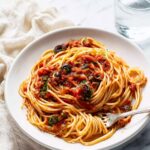
Puttanesca Pasta Recipe
- Prep Time: 10 minutes
- Cook Time: 30 minutes
- Total Time: 40 minutes
- Yield: 6 servings
- Category: Main Course
- Method: Stovetop
- Cuisine: Italian
Description
Classic Pasta Puttanesca is a vibrant and flavorful Italian dish made with a savory sauce of anchovies, garlic, olives, capers, and crushed tomatoes, served over perfectly cooked spaghetti or linguine. Ready in about 40 minutes, this pantry-friendly recipe combines robust Mediterranean ingredients to create a quick, satisfying meal full of bold, tangy, and slightly spicy flavors.
Ingredients
Sauce Ingredients
- 2 tablespoons extra virgin olive oil
- 1/2 cup finely chopped onion
- 3 cloves garlic, finely chopped
- 3-4 canned anchovies, chopped
- 2 tablespoons tomato paste
- 1/2 teaspoon red pepper flakes
- 1 (28-ounce) can crushed tomatoes
- 2 teaspoons dried oregano
- 2 tablespoons small (non-pariel) capers
- 3/4 cup (95 g) pitted olives (black or green), roughly chopped
Pasta Ingredients
- 1 pound spaghetti, linguine, or fettuccine
- Salt, for pasta water
- Extra virgin olive oil, for drizzling
- 1/4 cup chopped fresh parsley
Instructions
- Prepare boiling salted water: Bring a large pot of salted water to a boil, adding 1 tablespoon of salt for every 2 quarts of water to season the pasta properly.
- Cook onions and anchovies: Heat olive oil over medium heat in a large, deep sauté pan. Add the finely chopped onions and cook until soft and translucent, about 4 to 5 minutes. Stir in chopped anchovies along with some of their oil to enhance the sauce’s depth, then add garlic and cook for an additional minute.
- Add tomato paste and simmer sauce: Mix in tomato paste and cook it for 2 minutes, stirring occasionally to develop flavor. Add crushed tomatoes, dried oregano, red pepper flakes, olives, and capers. Bring the sauce to a simmer, then reduce heat to low to maintain a gentle simmer for 10 to 15 minutes, allowing flavors to meld.
- Cook pasta: Once the salted pasta water reaches a rolling boil, add the pasta and cook according to package instructions until al dente—tender but still firm. Reserve 1/2 cup of pasta cooking water before draining.
- Finish sauce and combine: Stir chopped fresh parsley into the sauce. If the sauce is too thick, add some reserved pasta water to thin it to your preferred consistency.
- Toss pasta and serve: Drain the pasta and transfer it to a large bowl. Optionally toss with a drizzle of olive oil to prevent sticking. Add a ladle of sauce to the pasta and mix well to combine. Serve in shallow bowls topped with additional sauce and enjoy.
Notes
- This classic Italian pasta dish is quick and easy to prepare, taking approximately 40 minutes from start to finish.
- Made primarily from pantry staples like canned tomatoes, anchovies, olives, and capers, it’s an excellent choice for a flavorful meal with minimal shopping.
- Reserving pasta water is important to adjust the sauce consistency and help it cling to the pasta.
- Use high-quality extra virgin olive oil for best flavor.
- For a vegetarian adaptation, omit anchovies, although this will change the traditional flavor profile.
Nutrition
- Serving Size: 1 serving (approx. 1/6 of recipe)
- Calories: 429 kcal
- Sugar: 9 g
- Sodium: 662 mg
- Fat: 11 g
- Saturated Fat: 2 g
- Unsaturated Fat: 9 g
- Trans Fat: 0 g
- Carbohydrates: 72 g
- Fiber: 7 g
- Protein: 14 g
- Cholesterol: 3 mg