
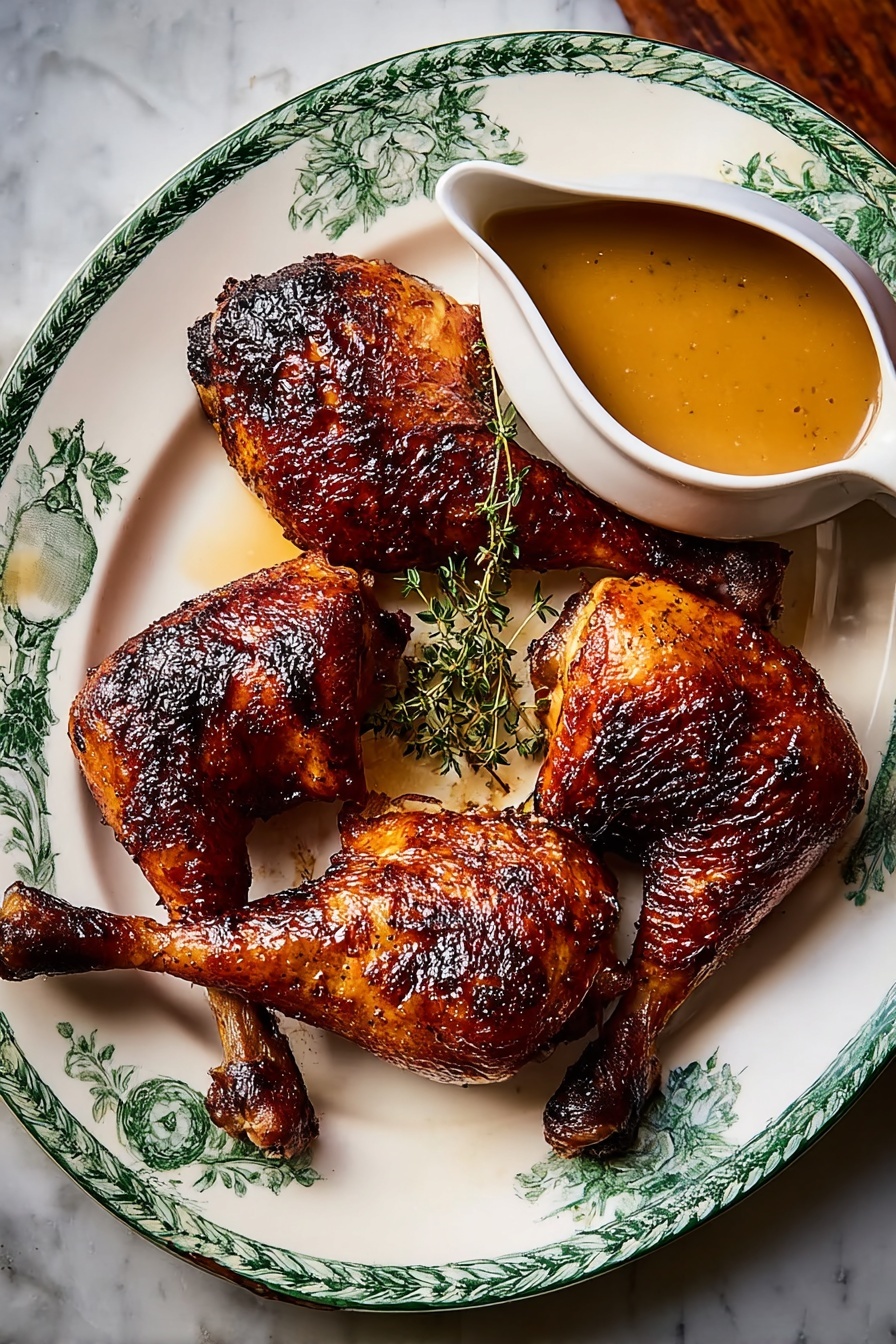
If you love the idea of rich, tender poultry with a stunningly flavorful twist, wait until you try my Roasted Goose Legs with Sour Cherry Glaze Recipe. This dish is like the ultimate comfort food meets fancy dinner party star, and trust me, it’s easier to nail than you’d guess. I absolutely love how the tangy sour cherry glaze plays off the crispy, golden goose skin — it’s unbeatably delicious and perfect for cozy nights or special gatherings. Keep reading, and I’ll walk you through every step to make this your new go-to roast.
Why You’ll Love This Recipe
- Incredible Flavor Combination: The sour cherry glaze adds a tart sweetness that perfectly complements the rich, savory goose legs.
- Crispy, Golden Skin Every Time: Drying the skin overnight ensures irresistibly crispy texture that’s a showstopper.
- Manageable and Impressive: Using legs instead of a whole goose makes this recipe approachable but still special.
- Built-In Gravy Magic: The pan juices and glaze come together effortlessly to create a luscious, homemade gravy that elevates the whole dish.

Ingredients You’ll Need
This recipe is all about balancing rich meat with bright, fruity flavors and aromatic herbs. When shopping, look for fresh young goose legs for tender meat and a spread like Divina sour cherry to get that authentic tangy-sweet glaze.
- Goose leg quarters: Fresh or fully thawed frozen legs are key to even cooking and a tender bite.
- Fine sea salt: I find fine sea salt seasons evenly without overshadowing the meat’s natural flavor.
- Black pepper: Freshly ground gives a nice subtle heat that complements the glaze.
- Sour cherry spread: This is the star of the glaze, so choose a quality brand or homemade preserve if you can.
- Red wine vinegar: Adds that necessary sharpness to balance the cherry’s sweetness.
- Dijon mustard: Helps emulsify and deepen the glaze’s flavor.
- Yellow onions: Cut in rings, they roast beautifully with the goose and add a mellow sweetness to the pan juices.
- Carrot: Roughly chopped for body and subtle earthiness in the roast pan.
- Thyme sprigs: A classic pairing with goose that brightens the dish.
- Water: Used to steam veggies in the roasting pan, which keeps things moist.
- Chicken stock: Key for roasting and adding depth to the pan gravy.
- All-purpose flour: For thickening the gravy to luscious perfection.
- Worcestershire sauce (optional): Just a splash adds umami punch to the gravy, but you can skip it.
Variations
I love playing with small tweaks to this Roasted Goose Legs with Sour Cherry Glaze Recipe depending on the season or what’s in my pantry. Don’t be afraid to adjust the herbs or swap in a different fruit spread for a twist.
- Herb swap: I’ve tried rosemary or sage instead of thyme, which changes the aroma pleasantly without overpowering the meat.
- Fruit glaze alternative: If you can’t find sour cherry spread, tart cranberry or blackcurrant preserves work surprisingly well.
- Dietary tweak: For a gluten-free gravy, I substitute arrowroot powder for flour and it thickens just fine.
- Spicier kick: Adding a pinch of chili flakes to the glaze gives it a nice warmth that my family goes crazy for.
How to Make Roasted Goose Legs with Sour Cherry Glaze Recipe
Step 1: Dry out the skin overnight for maximum crispiness
This is the game-changer step. I pat the goose legs completely dry and arrange them skin side up on a rimmed baking sheet. Then, uncovered, they go into the fridge for at least 8 hours or even up to 24. This overnight drying is what helps render the fat beautifully, so the skin crisps up instead of steaming in the oven. It’s worth the wait!
Step 2: Season and bring the legs to room temperature
Once your goose legs have had their overnight chill, pull them out and sprinkle with salt and pepper evenly. Letting them sit at room temperature for about an hour helps the thighs cook more evenly, ensuring juicy meat inside and no shock from cold protein hitting the oven.
Step 3: Make the luscious sour cherry glaze
While the legs are resting, whisk together your sour cherry spread, red wine vinegar, and Dijon mustard in a small saucepan over low heat. Stir gently until smooth and combined—just a couple minutes. Then strain it through a fine mesh to get that silky glaze free of any bits. You’ll thank me when it coats the goose skin beautifully without clumps.
Step 4: Roast the legs over a bed of veggies
Preheat your oven to 350°F and arrange the onions, carrot, and thyme sprigs on a large rimmed baking sheet. Adding a cup of water creates steam, which keeps the veggies moist and flavors the pan juices. Place the goose legs skin side up on top, spacing evenly. Roast for about 45 minutes until the skin starts rendering fat and gets beautifully golden.
Step 5: Drain fat and return to roast with stock
Carefully transfer the legs to a platter, then pour the pan juices and fat into a measuring cup or fat separator—save both separately. Return the legs to the veggies on the baking sheet, pour in chicken stock, and roast for another 20 minutes, basting with juices occasionally. This layered cooking keeps the meat extra moist and infused with flavor.
Step 6: Glaze and broil for that perfect lacquered finish
Brush the legs’ skin with your sour cherry glaze and continue roasting until the thickest part reaches 170°F, about 15-20 minutes. Then switch your oven to broil—watch closely! Broil 3-6 minutes until the skin turns a dark, lacquered mahogany. This step creates the crispy, sticky skin that I used to struggle to achieve until I found this timing sweet spot.
Step 7: Make the gravy from your pan juices
Strain the vegetables out from the baking sheet juices, separate fat from liquid, then use some reserved fat to make a roux with flour in a skillet over medium heat. Slowly whisk in the juices and chicken stock until you have about 1 1/4 cups of liquid. Cook until thickened, then season with Worcestershire sauce or salt. This gravy is so rich and flavorful, it’ll disappear fast at the table.
Pro Tips for Making Roasted Goose Legs with Sour Cherry Glaze Recipe
- Overnight Skin Drying: Don’t skip the uncovered fridge drying step—it’s the secret to perfectly crispy skin that isn’t soggy.
- Use a Meat Thermometer: I never roast goose without one; it prevents drying out the meat and ensures safe cooking to 170°F before resting.
- Glaze Application Timing: Apply the sour cherry glaze late in the process so it caramelizes without burning during the broil.
- Mind the Broiler: Keep a close eye when broiling—goose skin can go from perfect to burnt quickly.
How to Serve Roasted Goose Legs with Sour Cherry Glaze Recipe
Garnishes
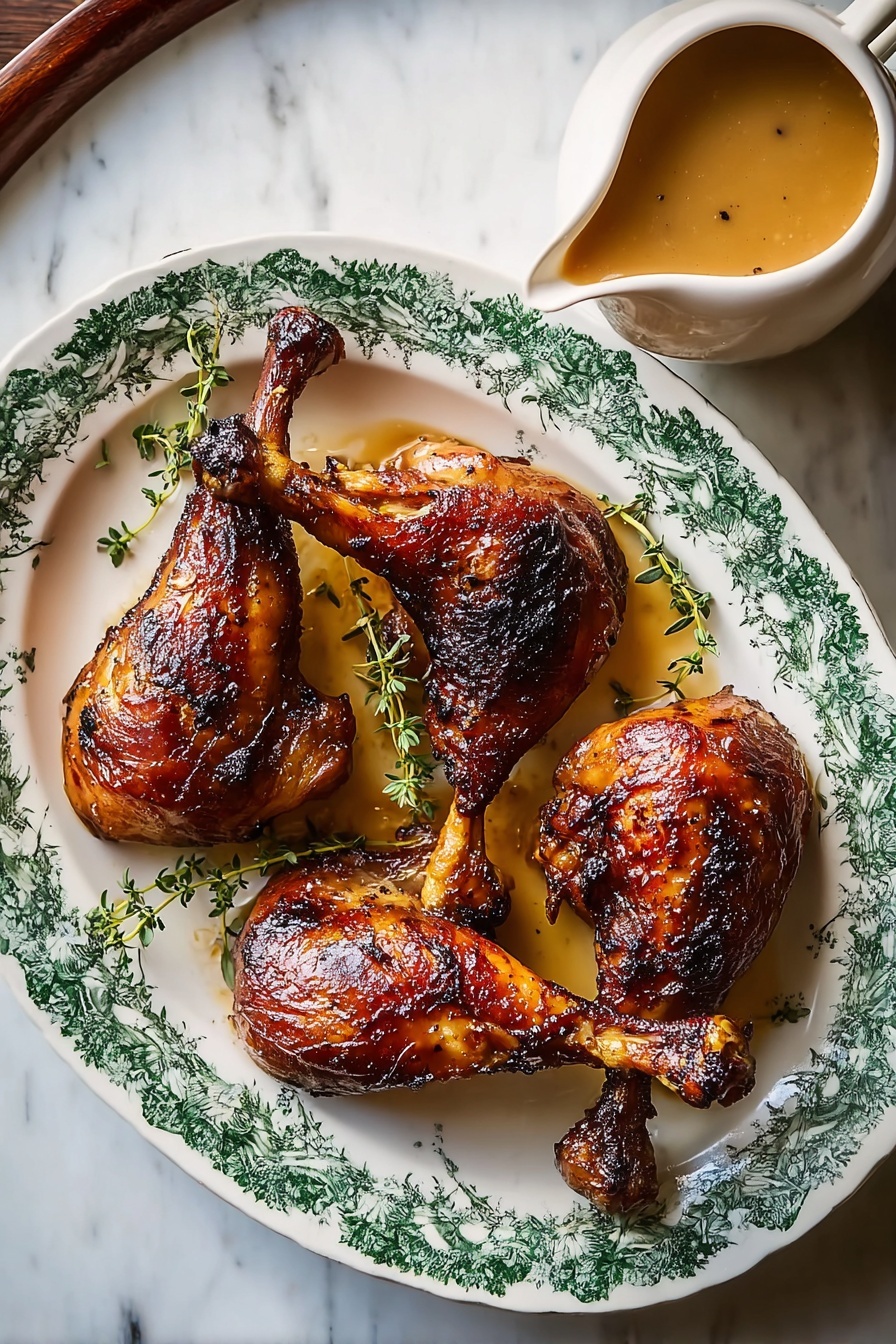
I like finishing mine with a sprinkle of fresh thyme leaves for herbal freshness and a few whole sour cherries if I can find them—they add a bright jewel-like pop and hint of tartness that ties everything together.
Side Dishes
Roasted root vegetables or creamy mashed potatoes are my favorite partners because they soak up the amazing gravy so well. Sometimes I throw together a simple braised red cabbage to bring some acidity and color contrast.
Creative Ways to Present
For special occasions, I serve the goose legs on a rustic wooden board surrounded by roasted seasonal veggies and small ramekins of extra cherry glaze and gravy for dipping. It feels festive and encourages everyone to dig in family-style.
Make Ahead and Storage
Storing Leftovers
Leftover goose legs keep beautifully in an airtight container in the fridge for up to 3 days. I always store the gravy separately to keep flavors fresh and textures right.
Freezing
I’ve frozen cooked goose legs wrapped tightly in foil and plastic wrap with great results. Just thaw overnight in the fridge before reheating. The glaze flavor holds up well, too!
Reheating
To bring leftovers back to life, I reheat them in a moderate oven (around 325°F) covered loosely with foil, basting occasionally with the leftover glaze or pan juices, so they stay moist. Pop under the broiler for a minute or two if you want to crisp the skin again.
FAQs
-
Can I use duck legs instead of goose legs in this recipe?
Absolutely! Duck legs have a similar rich flavor and fat content. You’ll want to adjust the cooking time slightly since duck legs are smaller and may cook faster, so keep an eye on the internal temperature.
-
What if I don’t have sour cherry spread? Can I substitute something else?
If you can’t find sour cherry spread, tart preserves like cranberry or blackcurrant make excellent stand-ins. Just be sure to choose something not too sweet, so the glaze stays balanced.
-
How do I know when the goose legs are done?
The safest and best way is to use a meat thermometer inserted into the thickest part of the meat. Aim for 170°F before glazing and broiling, and 180°F after broiling for optimal tenderness and safety.
-
Can I prepare the gravy ahead of time?
You can make the gravy a day ahead and reheat it gently on the stove. Just whisk in a bit of water or stock to loosen it if it has thickened too much in the fridge.
Final Thoughts
I can’t recommend this Roasted Goose Legs with Sour Cherry Glaze Recipe enough if you want a dish that feels special but isn’t intimidating to make. The crispy skin, tangy glaze, and rich homemade gravy make every bite memorable. I always find it brings everyone together around the table with smiles. Give it a try—you’ll be pleasantly surprised at how manageable and truly delicious it is. Plus, it’s a recipe you can proudly pull out whenever you want to wow friends or treat your family. Happy roasting!
Print
Roasted Goose Legs with Sour Cherry Glaze Recipe
- Prep Time: 10 minutes plus 8 to 24 hours refrigeration
- Cook Time: 1 hour 45 minutes
- Total Time: 9 hours 55 minutes to 25 hours 55 minutes (including refrigeration)
- Yield: 4 servings
- Category: Main Course
- Method: Roasting
- Cuisine: European
Description
This Roasted Goose Legs recipe offers a succulent and richly flavored dish featuring young goose legs glazed with a tangy sour cherry glaze and accompanied by a savory homemade gravy. The legs are dry-brined to ensure crispy skin, roasted over a bed of aromatic vegetables, and finished under the broiler for a beautifully lacquered finish. The combination of juicy, tender meat with the sweet cherry glaze and hearty gravy makes this an elegant yet manageable alternative to roasting a whole goose.
Ingredients
Goose Legs
- 4 young goose leg quarters (about 1 1/4 lb. each), thawed if frozen
- 4 teaspoons fine sea salt, plus more to taste
- 2 teaspoons black pepper
Glaze
- 0.25 cup sour cherry spread (such as Divina)
- 1 tablespoon red wine vinegar
- 1 teaspoon Dijon mustard
Vegetable Bed
- 2 small yellow onions, cut into 1/2-inch-thick rings
- 1 medium carrot, roughly chopped (about 1/2 cup)
- 2 (6-inch) thyme sprigs
- 1 cup water
Stock and Gravy
- 1 cup chicken stock, plus more if needed
- 2 tablespoons all-purpose flour
- 0.75 teaspoon Worcestershire sauce (optional)
Instructions
- Dry Brine Goose Legs: Pat the goose legs dry with paper towels and place them skin side up on a large rimmed baking sheet. Refrigerate uncovered for at least 8 hours or up to 24 hours to allow the skin to dry out, which helps achieve crispiness during roasting.
- Season and Rest: Remove the goose legs from the refrigerator and sprinkle them evenly with the sea salt and black pepper. Let the legs stand at room temperature for 1 hour to take the chill off and allow the seasoning to penetrate the meat.
- Prepare Glaze: Preheat the oven to 350°F with the rack placed about 10 inches from the top. In a small saucepan, combine the sour cherry spread, red wine vinegar, and Dijon mustard. Cook over low heat, stirring occasionally, until well combined and smooth, about 2 to 3 minutes. Strain the mixture through a fine wire-mesh sieve into a bowl to remove solids and set aside the glaze.
- Arrange Vegetables and Start Roasting: Spread the onion rings, chopped carrot, and thyme sprigs evenly on a large rimmed baking sheet. Pour in 1 cup of water. Place the goose legs skin side up on top of the vegetables, spacing them evenly. Roast in the preheated oven until the skin begins to render fat and brown, about 45 minutes.
- Transfer and Collect Juices: Remove the baking sheet from the oven and transfer the goose legs to a large platter. Carefully pour the pan juices and fat from the baking sheet into a heatproof measuring cup or fat separator, leaving the vegetables on the sheet. Set aside the juices and fat separately.
- Continue Roasting with Stock: Return the goose legs skin side up atop the vegetables on the baking sheet and pour in 1 cup of chicken stock. Return the baking sheet to the oven and roast for an additional 20 minutes, basting the legs occasionally with the pan juices.
- Prepare for Broiling: Separate the fat from the reserved pan juices if not already done. Brush the skin side of the goose legs with the prepared sour cherry glaze. Continue roasting at 350°F until a meat thermometer inserted into the thickest portion reads 170°F, about 15 to 20 minutes.
- Broil for Finish: Turn the oven broiler to high. Broil the goose legs until the skin turns a dark mahogany color, becomes lacquered, and an internal temperature of 180°F is reached, approximately 3 to 6 minutes. Transfer the legs to a platter and tent loosely with foil to keep warm.
- Make Gravy: Pour the vegetable mixture from the baking sheet through a fine wire-mesh strainer into a large heatproof measuring cup, discarding solids. Separate fat from strained pan juices by skimming or using a fat separator. Combine this fat with the reserved fat, and add chicken stock to pan juices as needed to measure 1 1/4 cups liquid.
- Cook Gravy Roux: Heat 2 tablespoons of the reserved fat in a small skillet over medium heat. Reserve any remaining fat for another use. Add flour to the fat and whisk constantly, cooking until the mixture turns golden brown, about 2 to 3 minutes.
- Finish Gravy: Gradually whisk in the reserved 1 1/4 cups of pan juices until smooth. Continue cooking and whisking until the gravy thickens, 1 to 2 minutes. Remove from heat and stir in Worcestershire sauce if using. Adjust seasoning with salt as needed.
- Serve: Serve the roasted goose legs hot alongside the rich sour cherry glazed skin with the savory gravy poured over or on the side.
Notes
- This recipe uses goose legs instead of a whole goose, making it more manageable for home cooks seeking rich goose flavor with less effort.
- Dry-brining the legs in the refrigerator overnight helps to crisp the skin during roasting.
- Using a fat separator for pan juices makes it easier to skim fat and achieve a smooth, less greasy gravy.
- Sour cherry spread adds a bright, tart contrast to the rich goose; if unavailable, you may substitute with a similar fruit preserve like cranberry or cherry preserves.
- Monitoring the internal temperature of the meat ensures perfectly cooked legs without drying.
Nutrition
- Serving Size: 1 goose leg quarter
- Calories: 144 kcal
- Sugar: 3 g
- Sodium: 1523 mg
- Fat: 8 g
- Saturated Fat: 2 g
- Unsaturated Fat: 6 g
- Trans Fat: 0 g
- Carbohydrates: 8 g
- Fiber: 1 g
- Protein: 10 g
- Cholesterol: 31 mg